Creating something new is not always the smartest way to create momentum.
Sometimes the offer with the most potential is already sitting inside your business. It may need sharper positioning, a better sales page, a more intentional customer experience, or simply another opportunity to be seen.
Learning how to relaunch an existing offer allows you to build on work you have already done instead of returning to a blank page every time you want to generate revenue. You keep the strongest parts, improve what is underperforming, and introduce the offer with a clearer reason to pay attention.
A relaunch is not a consolation prize for an offer that failed. Done thoughtfully, it is a strategic way to refine your ideas, learn from real behavior, and give good work a longer life.

First, Decide Whether the Offer Is Worth Relaunching
Not every offer needs another round. Before changing the name, redesigning the graphics, or planning a new campaign, look at the offer itself.
An existing offer is usually a good candidate for a relaunch when:
- It solves a problem your audience still has.
- Previous customers received a meaningful result from it.
- People have shown interest but hesitated to buy.
- The offer is useful, but its value has not been communicated clearly.
- Your audience has grown or changed since the original launch.
- The delivery experience could be improved without rebuilding everything.
- You still feel confident attaching your name to the work.
The strongest reason to relaunch is not that you spent a long time creating the offer. It is that the offer still has a valuable job to do.
If the original idea no longer fits your audience, expertise, or direction, you do not need to force it back into relevance. You may be able to extract a useful framework, template, lesson, or smaller product from it instead.
Diagnose the Original Launch Before You Change the Offer
A disappointing launch does not automatically mean the offer was wrong. The issue may have appeared elsewhere in the path between discovering the offer and deciding to buy.
Review the original launch in four parts.
The offer
Was the result specific enough? Could someone quickly understand what they would receive and why it mattered?
An offer can be beautifully made and still feel difficult to purchase when it promises something vague. “Feel more organized” is pleasant, but “plan your next four weeks of content in one afternoon” is easier to picture and evaluate.
The audience
Did you promote the offer to people who were ready for that result?
A beginner may not need an advanced strategy intensive. An established business owner may not want another introductory workbook. The offer and the buyer need to meet at the right level of readiness.
The messaging
Did your content explain the problem, the desired result, and the role of the offer?
If most of the promotion focused on announcing dates, revealing graphics, or listing modules, your audience may never have understood why the offer was relevant to them.
The buying experience
Was it easy to find the information needed to make a decision?
Look for avoidable friction:
- An unclear sales page
- Missing pricing details
- A vague description of what is included
- No explanation of who the offer is for
- A confusing checkout process
- Too many bonuses competing with the main result
- No answers to common questions
- Weak or nonexistent follow-up
Identify the most likely point of friction before you start revising. Otherwise, you risk polishing parts of the offer that were never the problem.
Use Evidence, Not Launch-Day Emotion
Launches can feel intensely personal. A quiet sales day can make a thoughtful offer seem suddenly questionable.
Give yourself enough distance to review the evidence more objectively.
Useful information may include:
- Sales-page visits
- Email opens and clicks
- Checkout-page visits
- Questions received before purchase
- Refund requests
- Customer feedback
- Completion or usage patterns
- Testimonials and unsolicited messages
- Content topics that generated the most replies or saves
You do not need sophisticated analytics to notice meaningful patterns.
If people clicked through but did not purchase, the sales page, positioning, price, or perceived urgency may need attention. If they never clicked, the promotional message may not have created enough interest. If customers bought but rarely used the offer, the format or onboarding may have created unnecessary effort.
Numbers show you what happened. Conversations can help you understand why.
Reach out to a small number of past buyers, interested subscribers, or ideal clients and ask focused questions. Instead of asking, “Did you like it?” try:
- What were you hoping this would help you accomplish?
- What almost stopped you from buying?
- Which part felt most valuable?
- Where did you feel unsure or overwhelmed?
- What would have made the decision easier?
- How would you describe the offer to someone else?
Pay attention to the language people naturally use. Their words may be clearer and more specific than the language on your original sales page.

Decide What Kind of Relaunch You Actually Need
A relaunch does not have to become a complete reinvention. Choose the smallest level of change that meaningfully improves the offer.
A visibility relaunch
Choose this when the offer is strong, the customer experience works, and the primary issue was limited reach.
You may only need:
- A fresh promotional angle
- More lead time
- Better email follow-up
- New examples or demonstrations
- A clearer launch calendar
- More consistent visibility before opening
A messaging relaunch
Choose this when people saw the offer but did not immediately understand its relevance.
Focus on:
- A more specific promise
- Clearer audience language
- Stronger sales-page copy
- Better examples of the outcome
- More useful objection handling
- A simpler explanation of what is included
An experience relaunch
Choose this when customers bought the offer but struggled to use, complete, or implement it.
Possible improvements include:
- A shorter onboarding process
- A clearer starting point
- Revised instructions
- Better file organization
- A progress checklist
- More examples
- A more accessible delivery format
A repositioning relaunch
Choose this when the core material is valuable, but the original audience, use case, or framing no longer fits.
A broad guide to “content strategy,” for example, might become a focused system for planning a month of launch content. The underlying expertise remains, but the context becomes more specific and useful.
Naming the type of relaunch prevents the project from expanding without a clear reason.
Refine the Offer Around One Primary Result
Offers often become harder to sell as more information is added to them.
A buyer rarely needs the largest possible collection of lessons, files, calls, and bonuses. They need confidence that the offer can help them make a meaningful change.
Write one sentence that completes this thought:
This offer helps [specific person] move from [current problem] to [desired result] by [method or format].
For example:
This offer helps service providers turn scattered launch ideas into a focused four-week promotional plan using a guided planning system.
That sentence gives you a standard for every relaunch decision.
If a bonus does not support the result, remove it. If a module creates unnecessary complexity, shorten it. If the name sounds attractive but hides the purpose, clarify it.
A refined offer often feels more premium because the experience has been edited with care.
Rebuild the Sales Page Around the Buyer’s Decision
Your sales page does not need to document every detail of the creation process. It needs to help the right reader decide whether the offer fits.
A strong relaunch sales page should answer the following questions in a natural order:
- What is this?
- Who is it for?
- What problem does it address?
- What becomes easier or possible after using it?
- What is included?
- How does the experience work?
- Why was it designed this way?
- What concerns might the buyer have?
- What should they do next?
Lead with the result rather than the format.
“Six video lessons and a 42-page workbook” describes the contents. “A focused plan for turning your expertise into a clear, sellable offer” describes the value.
Both details matter, but they do not carry equal weight.
You can also make the page more concrete with small moments of specificity:
- Show a preview of the workbook or dashboard.
- Explain what a customer can do during the first 30 minutes.
- Include a sample lesson or page.
- Describe a realistic use case.
- Clarify the expected time commitment.
- State what the offer does not include.
Specificity makes an offer feel more trustworthy. It helps the buyer imagine herself using it in real life.
Give the Relaunch a New Point of View
A new visual direction can make a relaunch feel current, but the campaign needs more than different colors and photographs. It needs a fresh editorial angle.
The angle is the central idea that makes the offer timely and worth reconsidering.
Suppose you are relaunching a planning template. The first campaign may have focused on productivity. The new campaign could focus on reducing the number of decisions required to run a business each week.
The product has not changed dramatically. The perspective has.
Possible relaunch angles include:
- A simpler way to achieve the result
- A more thoughtful alternative to a common approach
- A seasonal or timely use case
- A lesson you learned from previous customers
- A refined method based on real feedback
- A specific mistake the offer helps prevent
- A behind-the-scenes look at how the process works
Choose one primary angle for the campaign. Repeating a clear idea in several useful ways is more effective than giving every post a completely different message.
Build a Relaunch Content Sequence
A good relaunch campaign creates recognition before it asks for a decision.
Instead of posting isolated announcements, arrange your content as a sequence.
Phase one: Name the problem
Help your audience recognize the issue the offer addresses.
Talk about symptoms, common mistakes, incomplete solutions, or the hidden reason a task feels harder than it should.
Phase two: Introduce your perspective
Show how you think about the problem differently.
Share a framework, useful distinction, short tutorial, or behind-the-scenes decision. This demonstrates the thinking behind the offer without giving away the entire experience.
Phase three: Make the result tangible
Show what the offer helps someone create, decide, simplify, or complete.
Use examples, previews, demonstrations, customer language, and realistic scenarios.
Phase four: Present the offer
Explain what it is, who it is for, what is included, and how to purchase.
Do not assume that people have followed every piece of content. Each direct promotional message should make sense on its own.
Phase five: Support the decision
Answer questions, address hesitation, clarify deadlines, and remind readers of the outcome.
A relaunch does not require constant posting. A smaller collection of connected, specific messages will usually feel more compelling than a large volume of repetitive promotion.
Invite Past Interest Back Into the Conversation
One advantage of a relaunch is that you are not beginning with no context.
There may already be people who:
- Joined the original waitlist
- Clicked the sales page
- Asked a question
- Saved related content
- Purchased another offer
- Replied to an email about the topic
- Said they wanted to join at a later date
Create a considerate way to reintroduce the offer to them.
You might share what has changed, why you refined it, and who the updated version is designed to help. Past customers can receive an upgrade, a returning-customer option, or simple instructions for accessing improvements when appropriate.
Avoid manufacturing exclusivity. A relaunch feels more confident when the reason to return is substantive: clearer positioning, a better experience, stronger support, or a more relevant application.
Set the Price From the Current Offer, Not Its History
Do not keep an outdated price simply because it appeared on the original sales page.
Review the offer as it exists now. Consider:
- The specificity and importance of the result
- The level of access or support
- The time or effort the product may save
- The quality and usability of the materials
- The alternatives available to the buyer
- The role the offer plays in your wider business
- The amount of delivery required from you
A relaunch does not automatically justify a price increase. Meaningful improvement may.
If the offer has become simpler, that does not necessarily make it less valuable. A concise tool that helps someone reach the result faster may be more useful than a large resource library.
Price the current experience with intention, then communicate the value clearly enough that the number does not arrive without context.
Create a Short, Focused Relaunch Timeline
A relaunch can be lighter than an original launch because the foundational work already exists.
A simple four-week schedule might look like this:
Week one: Audit
Review feedback, analytics, customer behavior, positioning, and the sales experience. Decide what actually needs to change.
Week two: Refine
Update the offer, delivery process, sales page, checkout, onboarding, and frequently asked questions.
Week three: Prepare
Create campaign content, emails, graphics, previews, links, and a simple publishing schedule. Test the full customer journey.
Week four: Relaunch
Publish the promotional sequence, open the offer, respond to questions, and track useful signals without reacting to every hour of activity.
Protect the final days before launch from unnecessary additions. Last-minute extras often create more confusion than value.
Know What Success Looks Like Before You Begin
Revenue matters, but it is not the only useful measure of a relaunch.
Choose a small set of indicators that match the current stage of the offer:
- Qualified sales
- Sales-page conversion
- Email click-through
- Waitlist growth
- Customer engagement
- Completion or usage
- Fewer pre-purchase questions
- More specific inquiries
- Stronger customer feedback
You may discover that the relaunch improves the offer’s long-term performance even if it does not produce a dramatic opening day.
A clearer sales page can convert future readers. Better onboarding can generate stronger testimonials. More precise positioning can improve every piece of content you create afterward.
The relaunch is both a campaign and a refinement process.
Let Good Offers Become Recognizable
A business becomes easier to understand when its strongest ideas are allowed to remain visible.
Constantly replacing your work can make it difficult for an audience to remember what you do. Relaunching gives an offer time to become associated with your name, point of view, and expertise.
You are not repeating yourself simply because you are speaking about the same offer again. New people have arrived. Existing followers may be ready now. Your own thinking may be sharper. The context may have changed.
The goal is not to preserve every offer forever. It is to recognize when good work deserves a more considered second introduction.
If you have an existing offer with a strong foundation but an unclear next chapter, Reverie Maven can help you refine the positioning, customer experience, and launch direction so the relaunch feels cohesive from the first message to the final sale.
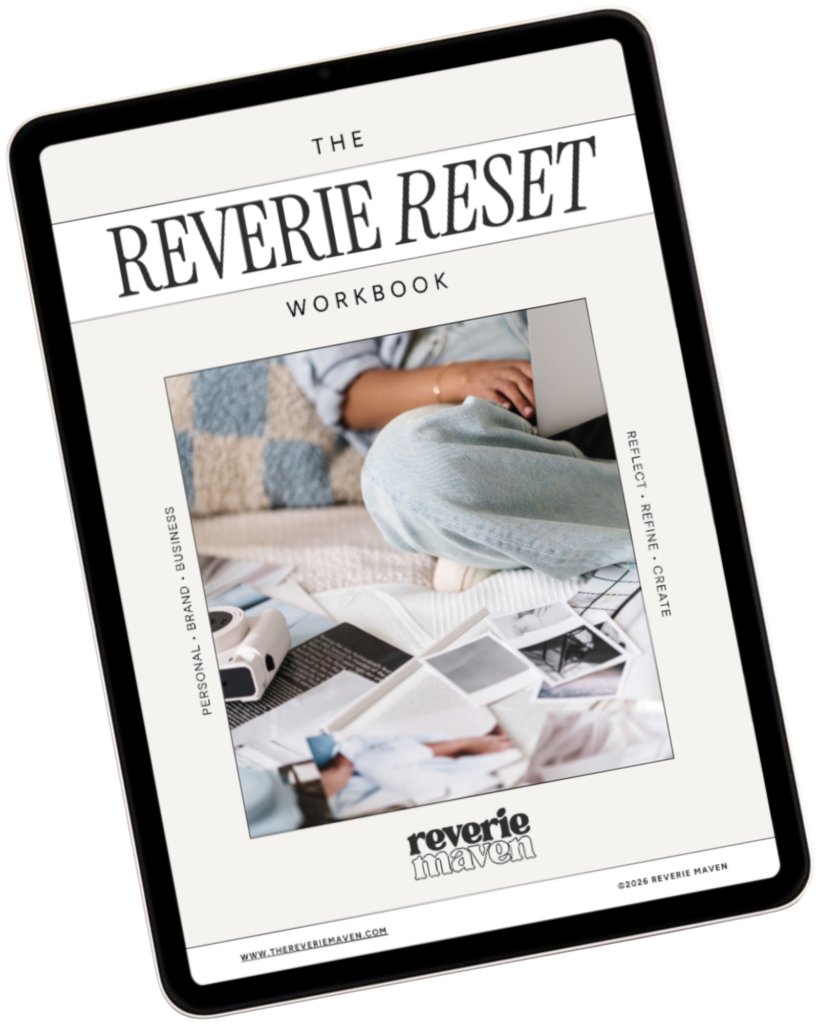
YOUR FREE STARTING POINT
Start with The Reverie Reset
A reflective workbook for reconnecting with yourself, getting clearer about what you genuinely want, and beginning to create a life and presence that feel more aligned, intentional, and fully your own.
Consider this your first step out of “someday” and toward what comes next.