Spend enough time inside your own brand and eventually even the details you once loved can begin to feel painfully familiar.
The color palette looks predictable. The photography no longer gives you ideas. Your favorite font has somehow become the font you cannot bear to look at for another minute. You open a new social post, stare at the same templates, and wonder whether the entire identity needs to be replaced.
Sometimes that feeling signals a genuine need for change. Often, it signals something else: creative fatigue, overexposure, unclear messaging, or a brand system that has become too rigid to support fresh ideas.
Knowing what to do when your brand feels boring begins with diagnosing the right problem. A complete rebrand may be appropriate, but it should not be the automatic response to temporary boredom.
Before you change the logo, abandon the palette, or order an entirely new collection of brand photography, take a closer look at what has actually gone stale.

Familiarity Is Not the Same as Failure
You see your brand far more often than anyone else does.
You review every image, write every caption, adjust every page, and make dozens of decisions within the same visual and verbal system. Your audience experiences only a fraction of that repetition. What feels overdone to you may be the consistency that is finally helping someone else recognize your work.
This is one of the more frustrating parts of building a recognizable brand: you will often become tired of it before your audience has fully learned it.
That does not mean you should ignore your instincts. It means your boredom needs context.
Ask yourself:
- Has the brand stopped working, or have I simply looked at it too much?
- Are customers confused, or am I creatively restless?
- Does the identity no longer reflect the business, or do I need new ways to use it?
- Am I tired of the brand itself, or tired from producing content?
- Have my offers changed more than my messaging has?
- Is the visual system too limited, or have I stopped exploring it?
A useful brand decision begins with evidence, not irritation.
Decide What Kind of Bored You Are
“Boring” can describe several different problems. Each one requires a different response.
Visual boredom
The brand still represents your business, but the execution feels repetitive. You use the same layouts, crops, backgrounds, templates, and image combinations every week.
This usually calls for expanded art direction rather than a new identity.
You may need:
- A broader photography library
- New image crops and compositions
- More variation in scale and whitespace
- A secondary background color
- Additional supporting type styles
- A refined set of textures or graphic details
- New editorial layouts
- Motion or video treatments
The core identity can remain intact while the way you express it becomes more varied.
Verbal boredom
Your visuals still feel right, but every caption, headline, and sales page seems to say the same thing.
This may be a messaging problem rather than a branding problem.
Look for phrases you repeat because they are easy, not because they are precise. Review whether your content is circling broad themes without offering a distinctive opinion, useful detail, or memorable language.
Your brand may need stronger points of view, more specific examples, and a wider range of stories.
Strategic boredom
The brand feels flat because the business has evolved beyond the positioning it was built to support.
Perhaps your offers are more sophisticated now. Your audience has changed. Your pricing has increased, but your website still speaks to an earlier stage of customer. You may have moved from general services into a specific specialty without updating the brand around that expertise.
In this case, aesthetic changes alone will not solve the problem. The positioning needs attention first.
Creative fatigue
Sometimes the brand is not boring. You are depleted.
When every creative decision feels dull, the answer may be rest, input, or a temporary change of format. Rebranding while exhausted can turn a passing creative low into an expensive long-term decision.
Notice whether other creative work also feels uninteresting. If it does, give yourself room to recover before making permanent changes.

Do Not Use Your Own Boredom as Customer Research
Your emotional response matters, especially in a founder-led brand. It simply should not be the only information guiding the decision.
Look at how the brand is performing outside your own perspective.
Review:
- The questions potential clients ask before working with you
- The language clients use when describing why they chose you
- The pages people visit most often
- The content that receives meaningful engagement or inquiries
- Whether your offers are easy to understand
- Whether your visuals still match your price point
- Whether the brand attracts the type of work you want
- Whether people recognize your content before seeing your name
Pay particular attention to unsolicited feedback. If people consistently describe your brand as polished, thoughtful, warm, distinctive, or trustworthy, those associations are valuable assets. Do not discard them simply because the palette no longer surprises you.
You may discover that the identity is working well while the creative process around it needs to change.
Return to the Brand’s Most Interesting Contrast
Memorable brands are rarely built around one adjective.
“Professional” alone is expected. “Beautiful” is too broad. “Approachable” is pleasant but not distinctive.
The most interesting brands often contain a useful contrast:
- Polished and personal
- Aspirational and practical
- Romantic and structured
- Playful and precise
- Minimal and expressive
- Fashion-forward and deeply competent
- Warm and authoritative
That contrast creates creative range.
If your brand feels one-dimensional, return to the two qualities it should hold at the same time. You may have been expressing one side so consistently that the other has disappeared.
For example, a brand built around polished expertise and creative personality can become sterile if every design decision emphasizes professionalism. It may need more personal imagery, unexpected language, tactile details, or a less formal content format.
A brand built around warmth and accessibility can begin to feel overly casual if its expertise is not equally visible. It may need stronger educational content, clearer opinions, better case studies, or more refined presentation.
The answer is not always new branding. Sometimes it is restoring the tension that made the brand interesting in the first place.
Create Newness at the Edges
A strong brand has a stable center and flexible edges.
The center contains the elements that build recognition and trust:
- Positioning
- Audience
- Core promise
- Values
- Voice
- Primary visual identity
- Essential customer experience
The edges can change more freely:
- Campaign concepts
- Photography direction
- Content series
- Seasonal accents
- Styling
- Editorial themes
- Social formats
- Collaborations
- Launch visuals
When your brand feels boring, experiment at the edges before changing the center.
You might create a seasonal editorial concept using your existing colors in a different proportion. You could develop a recurring video series, introduce a new photography setting, or pair your typography in a more expressive way for one campaign.
This gives you creative movement without asking your audience to relearn who you are.

Refresh the Brand Before You Replace It
A thoughtful brand refresh can create meaningful change while preserving recognition.
Consider adjusting one or two areas at a time.
Expand the photography direction
If every image comes from the same type of desk scene, your content will begin to feel visually narrow even if the photographs are beautiful.
Add complementary categories such as:
- Portraits with natural movement
- Environmental details
- Process and behind-the-scenes imagery
- Fashion and personal styling
- Architectural details
- Close-up textures
- Client-facing moments
- Objects connected to your work
- Wider lifestyle scenes
Create a photography brief that defines lighting, color, mood, composition, and subject matter. This keeps new images cohesive without making them identical.
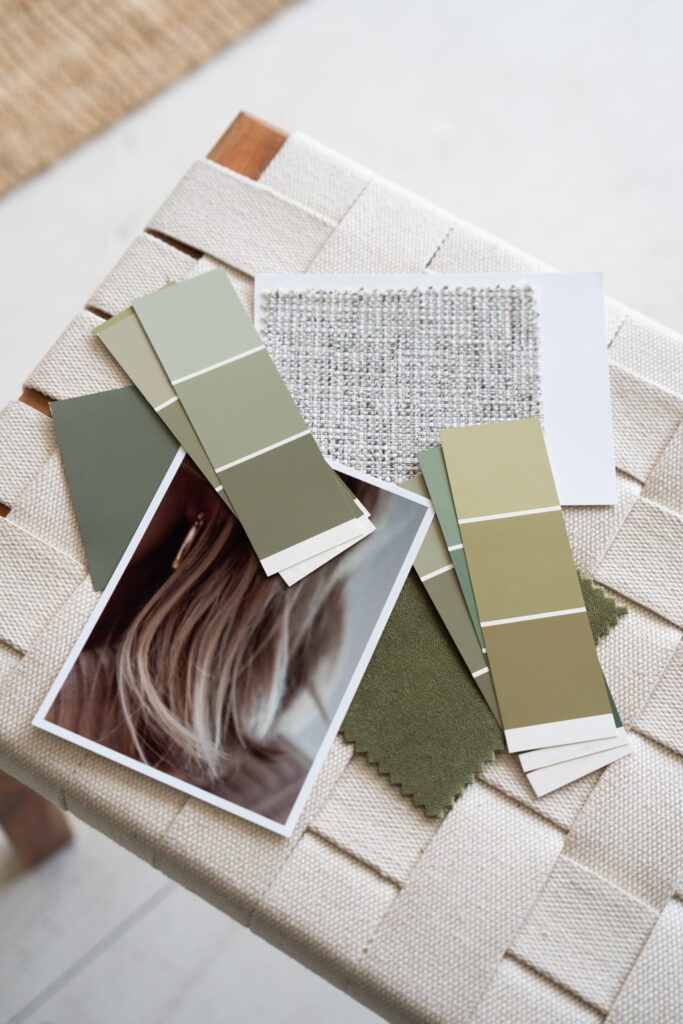
Reconsider how the palette is used
You may not need new colors. You may need a new hierarchy.
A color that currently dominates could become an accent. A secondary neutral could take on a larger role. A deeper shade could add contrast to launches or educational content.
Before adding colors, test different proportions of the ones you already own.
Introduce a new content format
Creative fatigue often grows from producing the same type of asset repeatedly.
Try a format that changes the creative question:
- A founder’s note
- A short visual essay
- An annotated case study
- A recurring advice column
- A mood-board breakdown
- A before-and-after analysis
- A behind-the-scenes process post
- A monthly edit or curated list
- A voiceover video
- A client question series
A new format can make familiar ideas feel more dimensional.
Sharpen the messaging
Review your homepage, bio, offer descriptions, and recent content.
Replace broad language with specific language. Clarify what you believe, how you work, what you notice, and what your audience can expect from you.
“Helping women build their dream business” may be technically accurate, but it gives the reader very little to remember. A more specific message creates stronger creative direction because it gives the brand something definite to express.
Build a Better Creative Brief
When you feel bored, it is tempting to search for inspiration without deciding what you need inspiration for.
That often produces a collection of attractive references with no strategic connection to the brand.
Instead, write a short creative brief.
Include:
Objective: What should feel different after this refresh?
Audience: Who needs to recognize themselves in the result?
Keep: Which existing elements still work and should remain?
Change: Which parts feel genuinely limiting or outdated?
Feeling: What should someone feel when they encounter the refreshed expression?
Proof: What should make the brand more credible or useful?
Constraints: Which colors, typefaces, messages, or formats must remain consistent?
Application: Where will this idea appear first?
A useful creative brief turns “I want something fresher” into a problem you can actually solve.
Change Your Inputs Before Changing Your Identity
Creative sameness can come from consuming the same references repeatedly.
If your inspiration folder contains brands from the same industry, using similar colors, fonts, photography, and language, your work will naturally begin to feel narrow.
Look beyond your immediate category.
Explore:
- Fashion editorials
- Interiors
- Packaging
- Print magazines
- Book design
- Film titles
- Museum identities
- Hospitality
- Architecture
- Beauty campaigns
- Independent publications
- Historical design references
Do not copy a finished style. Study what creates the feeling.
Is it the scale? The pacing? The material? The color proportion? The contrast between refined typography and candid photography? The amount of negative space?
Translating a principle from another field is more likely to produce distinctive work than borrowing another brand’s surface details.

Test the Refresh in One Small Place
You do not need to update every touchpoint before you know whether a new direction works.
Choose one contained application:
- A week of social content
- One email campaign
- A landing page
- A lead magnet
- A launch mood board
- A new photography set
- A presentation
- A seasonal campaign
Create the strongest version of the idea and observe it in context.
Ask:
- Does it still feel recognizable?
- Does it make the message clearer?
- Does it give me more creative range?
- Can I reproduce it consistently?
- Does it suit the audience and offer?
- Does it feel interesting beyond the initial novelty?
- Would it strengthen the full brand system?
A small test lets you distinguish a useful direction from an attractive detour.
Know When a Full Rebrand Is Actually Appropriate
Sometimes the brand has reached the end of its useful life.
A larger rebrand may be justified when:
- The business model has changed substantially
- Your core audience is different
- Your offer suite has moved into a new category
- The current identity undermines your price or positioning
- Your messaging no longer reflects what you do
- The visual system cannot function across the platforms you use
- The brand is frequently confused with competitors
- The identity was created without strategy and has never felt cohesive
- You avoid sharing the business because the brand no longer represents it
Even then, begin with strategy. Changing colors and typography before clarifying the business can produce a more attractive version of the same problem.
A rebrand should make the company clearer, more relevant, and easier to grow. It should do more than relieve temporary boredom.

A 90-Minute Brand Refresh Exercise
If you want to explore the issue without making permanent changes, set aside 90 focused minutes.
Minutes 0–15: Inventory the current brand
Gather your homepage, social feed, recent emails, brand guide, sales pages, and core templates.
Notice where the brand feels strong and where it becomes repetitive.
Minutes 15–30: Make a keep list
Identify the elements that still feel recognizable, effective, and aligned.
Include customer associations you want to preserve.
Minutes 30–45: Diagnose the boredom
Decide whether the issue is primarily visual, verbal, strategic, or creative.
Choose one problem to address first.
Minutes 45–65: Develop one fresh direction
Create a small concept using existing brand elements in a different way.
You might explore a new photography category, editorial layout, content series, or color proportion.
Minutes 65–80: Apply it
Use the concept on one real asset, such as an email header, social post, or landing-page section.
Do not judge it only as a mood board. Test whether it can carry actual information.
Minutes 80–90: Evaluate it
Write down what feels stronger, what still feels off, and what deserves a second test.
End with one decision, not ten possibilities.
Your Brand Does Not Need to Surprise You Every Day
A brand has a different job from a personal creative project.
It needs to remain recognizable long enough to build meaning. It needs to communicate clearly, support the business, and give your audience a consistent experience. Constant novelty can work against all three.
You are still allowed to evolve. In fact, a strong brand should have enough range to evolve with you.
When your brand feels boring, resist the urge to immediately replace it. Diagnose the source. Look at the evidence. Restore the contrast that made it interesting. Experiment at the edges and test the strongest ideas in context.
You may find that the brand does not need to become someone new. It simply needs more room to express who it already is.
If you want support clarifying or refining the next version of your brand, explore Reverie Maven’s services and resources for thoughtful strategy, creative direction, and an identity that feels distinctive without losing what already works.
YOUR FREE STARTING POINT
Start with The Reverie Reset
A reflective workbook for reconnecting with yourself, getting clearer about what you genuinely want, and beginning to create a life and presence that feel more aligned, intentional, and fully your own.
Consider this your first step out of “someday” and toward what comes next.