A personal brand can look impeccable and still feel strangely anonymous.
The photographs are beautiful. The color palette is cohesive. The captions sound polished. Yet someone could replace your name with another founder’s and very little would change.
The opposite happens too. A brand can feel deeply personal, full of interests, observations, routines, and glimpses of everyday life, while leaving the audience unsure what the person actually does.
Learning how to build a personal brand means finding the space between those two extremes. Your brand needs enough personality to be recognizable and enough strategy to make your value understandable.
Selling does not require turning yourself into a performance. It requires helping the right people connect who you are with what you know, what you offer, and why your work is worth choosing.

A Personal Brand Is Not Your Entire Personality
Your personal brand is a considered expression of your identity, expertise, perspective, and work.
It is not a complete record of who you are.
You can be warm without sharing private details. You can be visible without documenting every day. You can have a distinctive brand without turning every interest into a content category.
This distinction makes personal branding more sustainable. Instead of asking, “How do I package myself?” ask:
Which parts of me are relevant to the work, meaningful to the audience, and comfortable to share?
Your brand may include:
- Your professional expertise
- The way you approach your work
- Your taste and visual perspective
- Your values in practice
- Your communication style
- Relevant experiences
- Select personal interests
- The standards you bring to the client or customer experience
It may exclude family details, relationships, health information, your home, real-time location, or anything else you prefer to keep outside the business.
Boundaries do not make a personal brand less authentic. They make it possible to remain visible without feeling exposed.
Start With What You Want to Be Known For
Before choosing content pillars or planning a brand shoot, decide what you want people to associate with your name.
A strong personal brand makes a small collection of ideas easier to remember.
Complete these sentences:
- I want to be known for helping people ______.
- I want my work to be associated with ______.
- I want people to come to me when they need ______.
- I want my perspective to be recognized for ______.
- I want the experience of my brand to feel ______.
Keep the answers specific enough to guide a decision.
“I want to be known for creativity” offers very little direction. “I want to be known for turning complicated business ideas into clear, polished digital experiences” creates a stronger center.
You can also define three types of recognition:
Expertise: What do you understand especially well?
Approach: What is distinctive about the way you work?
Taste: What sensibility shapes what you create, recommend, or notice?
Expertise makes the brand useful. Approach makes it credible. Taste makes it recognizable.
Your personal brand becomes more compelling when all three work together.
Clarify the Commercial Connection
A personal brand can attract attention without creating demand.
If you want the brand to support a business, the audience needs to understand the relationship between your ideas and your offers.
Write down:
- What you sell
- Who it is for
- What problem, desire, or need it addresses
- What makes your approach relevant
- What someone should do if they want your help
Then compare those answers with your current public presence.
Would a new visitor understand them from your website, social profiles, featured content, and email signup? Or would they know your favorite coffee order and morning routine before they knew what you offer?
Lifestyle details can add texture and connection. They should not obscure the business.
A simple positioning sentence can help:
I help [specific audience] achieve [relevant result] through [service, method, or expertise].
You do not have to publish this sentence exactly. Use it as an internal filter for your messaging.
For example:
“I help creative service providers turn a scattered online presence into a clear, cohesive brand experience.”
That sentence can guide a website introduction, social bio, podcast description, and content strategy without appearing word for word in every place.
Find the Overlap Between Your Identity and Your Audience
A personal brand should sound like you, but it still needs to be meaningful to someone else.
The most useful material often sits at the intersection of three areas:
- What you genuinely care about
- What you have experience or authority to discuss
- What your audience wants help understanding, doing, or deciding
If a topic matters to you but has no connection to the audience or business, it may remain a personal interest. If a topic is popular but you have no real perspective on it, publishing it may create attention without strengthening the brand.
Look for subjects where you can contribute something more specific than a summary of familiar advice.
Perhaps you notice details other people overlook. You may have a refined method, a strong opinion, a useful framework, or a way of explaining something that makes it easier to understand.
That point of view is part of the value.
Develop a Point of View, Not a Persona
A memorable personal brand has opinions.
Not manufactured controversy. Not a collection of rigid declarations designed for engagement. A genuine point of view formed through experience, observation, standards, and taste.
Consider:
- What do you believe creates excellent work in your field?
- Which common advice do you approach differently?
- What do clients or customers misunderstand before working with you?
- What do you wish more people considered?
- Which standards are central to your process?
- What do you refuse to compromise?
- What feels unnecessarily complicated in your industry?
- What deserves more nuance than it usually receives?
Your answers can become recurring themes.
A website strategist might believe that clarity is more luxurious than visual excess. A photographer may care less about perfect posing and more about creating images that feel emotionally accurate. A business consultant may prioritize systems that respect a founder’s actual capacity rather than an idealized schedule.
These are more than content ideas. They tell people how you think.
A strong point of view helps potential clients decide whether they connect with your approach before they ever inquire.
Choose the Parts of Your Life That Support the Brand
A personal brand benefits from personality, but personality is not limited to personal disclosure.
You can express it through:
- The references you make
- The details you notice
- The visual worlds you create
- Your sense of humor
- The way you teach
- Your standards and preferences
- The rituals surrounding your work
- The stories you choose to tell
- The language you use
- The experiences that shaped your perspective
Choose two or three personal dimensions that feel natural and relevant.
For example, a creative consultant may share an interest in interiors because space, atmosphere, and visual composition influence her work. A founder may occasionally discuss travel because it shapes how she thinks about hospitality and customer experience.
The connection does not have to be literal. It should feel coherent.
Avoid adding lifestyle content merely because personal brands are expected to feel personal. If a detail does not interest you, support the brand, or build genuine connection, you are not required to publish it.
Create Content With Different Jobs
Personal-brand content becomes frustrating when every post is expected to educate, connect, establish authority, sell an offer, express personality, and generate immediate engagement.
Give individual pieces of content more focused roles.
Discovery Content
This introduces new people to your ideas.
It may include:
- Searchable tutorials
- Practical checklists
- Clear answers to common questions
- Shareable observations
- Pinterest-friendly guides
- Concise educational posts
Discovery content should be useful without requiring extensive familiarity with you.
Depth Content
This shows how you think.
It may include:
- Nuanced opinions
- Behind-the-scenes decisions
- Case studies
- Process explanations
- Lessons from experience
- Deeper essays or newsletters
Depth content gives someone a reason to trust your judgment, not simply appreciate a quick tip.
Connection Content
This helps the audience understand the person behind the work.
It may include:
- Relevant stories
- Creative influences
- Thoughtful routines
- Personal preferences
- Founder reflections
- Select moments from everyday life
Connection content should feel like a natural extension of the brand rather than a requirement to be constantly available.
Offer Content
This makes the commercial side of the brand visible.
It may include:
- Service introductions
- Product features
- Process details
- Frequently asked questions
- Client outcomes
- Offer comparisons
- Availability updates
- Invitations to inquire, book, join, or buy
Offer content is not an interruption when it is relevant to the ideas you regularly discuss. It completes the path.
A balanced personal brand uses all four types over time. The exact ratio depends on the business, platform, and season.
Build a Recognizable Content Territory
Content pillars can be useful, but broad categories such as “business,” “lifestyle,” and “inspiration” rarely provide enough direction.
Develop territories with a clearer connection to your perspective and work.
For example:
Instead of business, choose building elegant systems for creative businesses.
Instead of marketing, choose creating an online presence that feels polished and easy to navigate.
Instead of lifestyle, choose the rituals, spaces, and details that support thoughtful creative work.
Instead of motivation, choose making ambitious plans more realistic and sustainable.
A strong content territory tells you what belongs, what does not, and what angle makes the topic yours.
For each territory, define:
- The central idea
- Why it matters to your audience
- Your particular perspective
- The offer or resource it can naturally support
- Three to five repeatable content formats
This prevents the brand from depending on spontaneous inspiration while leaving room for range.
Make the Offer Visible Without Making Every Post a Pitch
People cannot buy an offer they rarely see or do not understand.
Many founders mention their services only when launching or when business feels slow. The sudden shift from generous content to urgent promotion can make selling feel more uncomfortable than it needs to.
Instead, allow the offer to exist naturally within the brand.
You might:
- Explain a decision you make during the process
- Share what a particular service is designed to solve
- Answer a question potential clients frequently ask
- Show a detail from an approved project
- Describe the difference between two ways to work with you
- Share a client experience with permission
- Explain what happens after someone inquires
- Connect an educational post to a relevant service
- Mention current availability directly
The purpose is not to make every piece of content transactional. It is to create enough familiarity that the offer does not appear unexpectedly.
A reader should understand what you sell long before you ask them to buy it.
Give Your Brand a Distinct Verbal Style
Visual branding creates recognition, but language creates intimacy.
Your verbal identity includes:
- Sentence rhythm
- Vocabulary
- Level of formality
- Humor
- Phrases you naturally use
- Phrases you avoid
- How directly you express opinions
- How you explain complex ideas
- How you invite someone to take action
Collect examples of your own writing that feel especially natural. These might come from emails, voice notes, captions, client messages, or journal entries.
Look for patterns.
Perhaps you are concise and direct. Perhaps you use vivid comparisons. Maybe your voice feels editorial and observant, warm and precise, or playful without becoming overly casual.
Create a short voice guide with:
- Three to five defining qualities
- Words and phrases that fit
- Words and phrases that do not
- Examples of strong openings
- Preferred calls to action
- Notes about punctuation and formatting
- A few paragraphs that sound unmistakably like you
Do not sand away every imperfection. A voice becomes recognizable through choices, including the ones a generic style guide might try to neutralize.

Create a Visual System You Can Sustain
A personal brand needs enough visual consistency to become recognizable, but it should not require a professional production every time you want to publish.
Build a flexible system that includes:
- A defined color palette
- One or two primary typefaces
- Consistent image editing
- Several repeatable graphic layouts
- A recognizable approach to photography
- Clear rules for covers, carousels, or thumbnails
- A small library of approved brand assets
Choose visual elements that reflect your actual taste rather than the current aesthetic of your industry.
Then make the system practical.
If every post requires custom art direction, an elaborate set, and several hours of design, consistency will be difficult to maintain. Combine elevated signature images with simpler supporting content.
A sustainable visual rhythm might include:
- Professional brand photographs
- Process or workspace images
- Carefully selected stock photography
- Simple text-based graphics
- Screenshots or examples
- Casual images that still suit the established color and mood
Consistency should create recognition, not monotony.
Use Evidence to Support the Story
A personal brand can be compelling while remaining too dependent on self-description.
If you repeatedly say that your work is strategic, thoughtful, transformative, or high-touch, show what those qualities look like.
Useful evidence may include:
- Case studies
- Client testimonials
- Portfolio examples
- Before-and-after comparisons
- Process explanations
- Specific project decisions
- Published work
- Relevant qualifications
- Speaking, teaching, or media experience
- Observable results you can accurately support
Choose evidence that matches the claim.
A testimonial about kindness does not prove strategic expertise. A beautiful final image does not explain whether the process was organized. A large audience does not automatically demonstrate that a service produces meaningful results.
Place evidence near the part of the brand it supports. Let the story and proof work together.
Keep the Brand Consistent Without Freezing It
A personal brand will change because the person and business behind it will change.
Consistency does not require repeating the same message forever. It requires enough continuity that the audience can follow the evolution.
When the brand begins to shift, identify what is changing:
- The audience
- The offer
- The expertise you emphasize
- Your point of view
- The visual direction
- The platforms you use
- The level of personal visibility
- The role you want the brand to play
Then identify what remains recognizable.
Your tone, standards, visual taste, central themes, or way of approaching problems may provide continuity while the services evolve.
You do not need a dramatic reintroduction every time the business matures. Make the new direction legible through repeated, consistent choices.
Audit the Brand From a New Visitor’s Perspective
Open a private browser and review the public version of your personal brand.
Search your name and business. Visit your website, social profiles, link-in-bio page, and any prominent interviews or directory listings.
Ask:
- Can I tell what this person does?
- Can I tell who the work is for?
- Is there a recognizable perspective?
- Does the brand feel like the same person across platforms?
- Is the offer visible?
- Can I understand how to work with or buy from them?
- Does the personality support the expertise?
- Is there enough evidence to trust the work?
- Are any details outdated?
- Is the next step clear?
Then ask someone less familiar with your business to describe what they think you do.
Do not correct or explain while they answer. The gaps between their interpretation and your intention show where the brand needs greater clarity.
A Practical Personal Brand Foundation
If you are building or refining your personal brand, create these seven foundational pieces:
- Recognition statement: What you want to be known for
- Positioning sentence: Who you help, how, and toward what result
- Point-of-view themes: The ideas and standards you consistently express
- Sharing boundaries: What is public, private, and context-dependent
- Content territories: The subjects your brand can return to repeatedly
- Offer connection: How your content and expertise lead naturally to paid work
- Verbal and visual guidelines: The choices that make the brand recognizable
Keep these in one accessible reference document. Review it before planning content, updating your website, preparing a brand shoot, or introducing a new offer.
The document should guide your expression, not script every sentence.
A Personal Brand That Sells Makes the Value Easy to See
The strongest personal brands do not feel like invented characters.
They feel edited, intentional, and clear.
Your audience can recognize the person, understand the expertise, and see the relationship between the ideas you share and the work you sell. Personality creates connection. Positioning creates relevance. Evidence creates trust. A clear offer gives that trust somewhere to go.
You do not have to reveal more of yourself than feels right. You do not have to imitate the loudest person in your field. You do not have to make every post a performance or every story a sales lesson.
Build the brand around what is true, useful, and distinctive. Then make the commercial path visible enough that the right people know how to take the next step.
If you are ready for a personal brand that feels more recognizable, cohesive, and connected to your business, explore Reverie Maven’s services for thoughtful support bringing your ideas, presence, and offers into clearer alignment.
YOUR FREE STARTING POINT
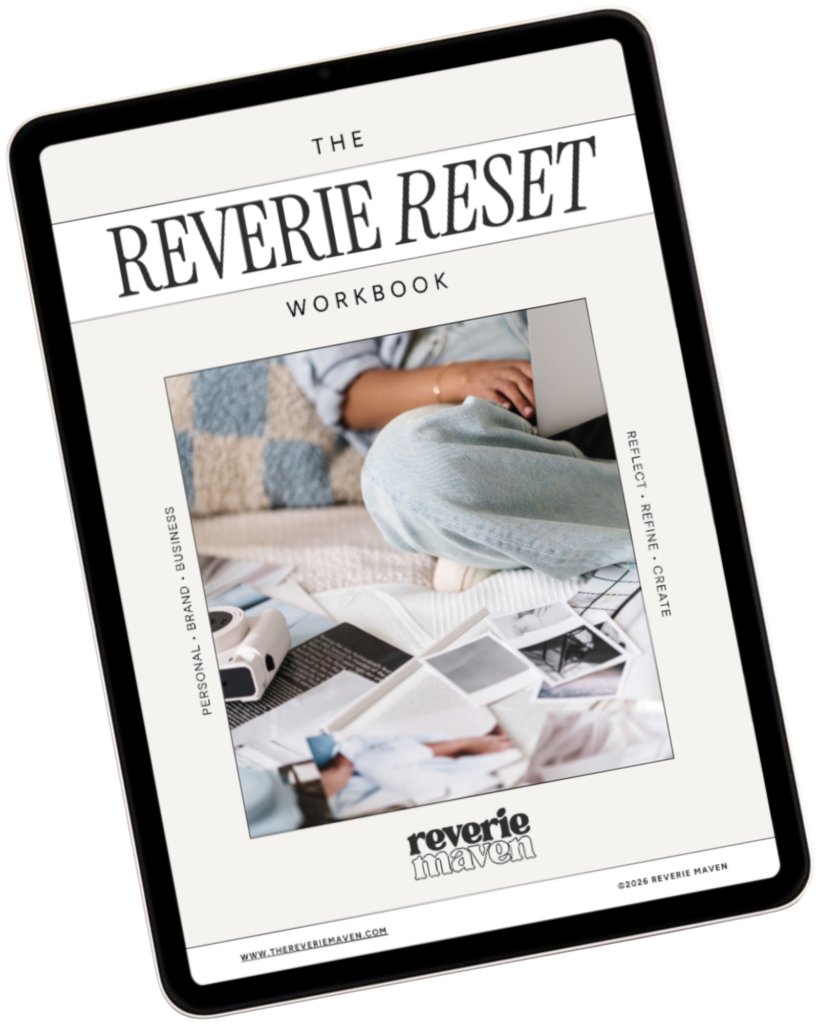
Start with The Reverie Reset
A reflective workbook for reconnecting with yourself, getting clearer about what you genuinely want, and beginning to create a life and presence that feel more aligned, intentional, and fully your own.
Consider this your first step out of “someday” and toward what comes next.